
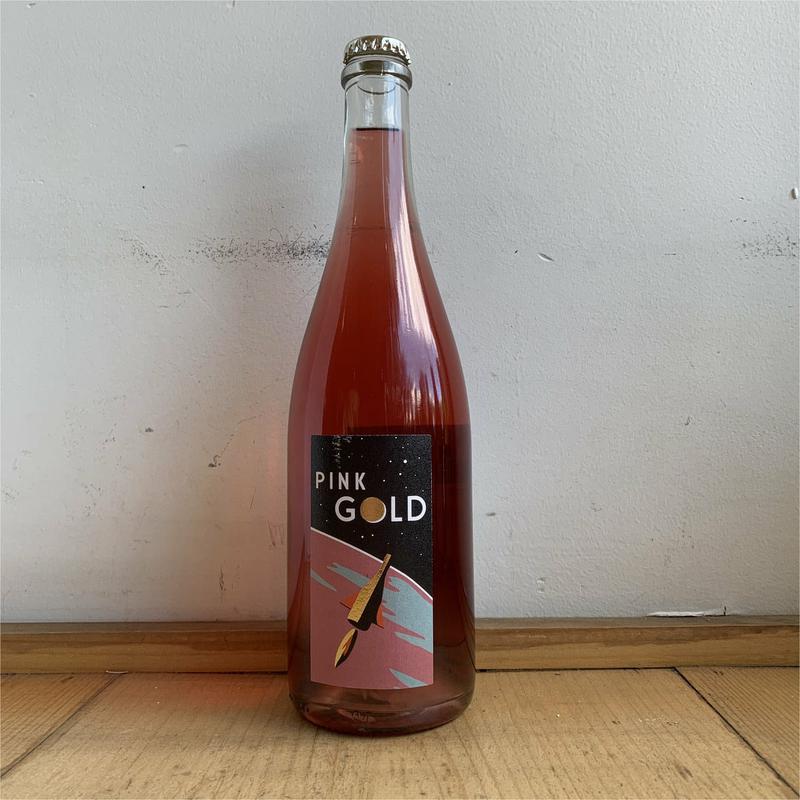
Leon Gold, \"Pink Gold\" 2020
$25.60$32.00

Despite its northerly limits, the region in the northeast of Austria is known as Lower Austria. The area derives its name from topographical features, perhaps speaking to the interconnected prominence and importance the land holds for its peoples: it is downriver from the Danube (technically the Enns River, a tributary of the enormous Danube) which flows from west to east, and so, into Lower Austria. The language centers the water. In any case, Lower Austria is certainly the growing area most associated with the well-renowned and powerful Grners and Rieslings the country produces. Some sub-regions you may have heard of because of these wines include the Kamptal, Kremstal, Wachau, and Wagram, to name a few. In the first of these regions, Kamptal so-named because of the river Kamp Hager Matthias has biodynamically worked 12 hectares of vines in his small hometown of Mollands since the age of 21. Hes got serious experience to boot; he knows this place as intimately as anyone. It makes sense, then, that the last time I saw him was at RAW wine festival a few years ago, with some sample limestone rocks from his vineyards that hed say you could lick if youd like as though he was imploring you to try to understand as deeply geologically the earth of his home. His wines carry buttoned-up mischief. Takes on site-specific Grner, Riesling, Sauvignon Blanc, and Zweigelt fizzers demonstrate the feeling of enough rootedness to become playful experimentation among the background in an otherwise resplendent & mercifullystraightforward picture.
100% Zweigelt, direct pressed and fermented with wild yeasts in stainless steel. Secondarycompleted in bottle. Unfined, unfiltered, no SO2, and undisgorged. Light, tart, crisp and refreshing, this is an uncomplicated and perfect summer pet nat. Make sure you get it ICE COLD before opening to avoid a bubble explosion!
 Sale
 Sale
 Sale
 Sale